We use cookies to make your experience better. To comply with the new e-Privacy directive, we need to ask for your consent to set the cookies. Learn more.


Essential Guide to WMS Rain-on-Grid Modeling
In the realm of water resources engineering, Rain-on-Grid (RoG) modeling has rapidly transitioned from a computationally prohibitive research method to an industry standard. Moving away from traditional lumped-parameter unit hydrographs in favor of applying spatially distributed precipitation directly to a 2D computational mesh, a frequent question arises: Can Aquaveo’s Watershed Modeling System (WMS) effectively handle true rain-on-grid workflows?
The short answer is yes, but the technical reality is highly dependent on the computational engine you select within the WMS interface. Here is a practical, engineering-focused breakdown of how to leverage WMS for RoG, and how it compares to standard hydrodynamic tools like HEC-RAS 2D.
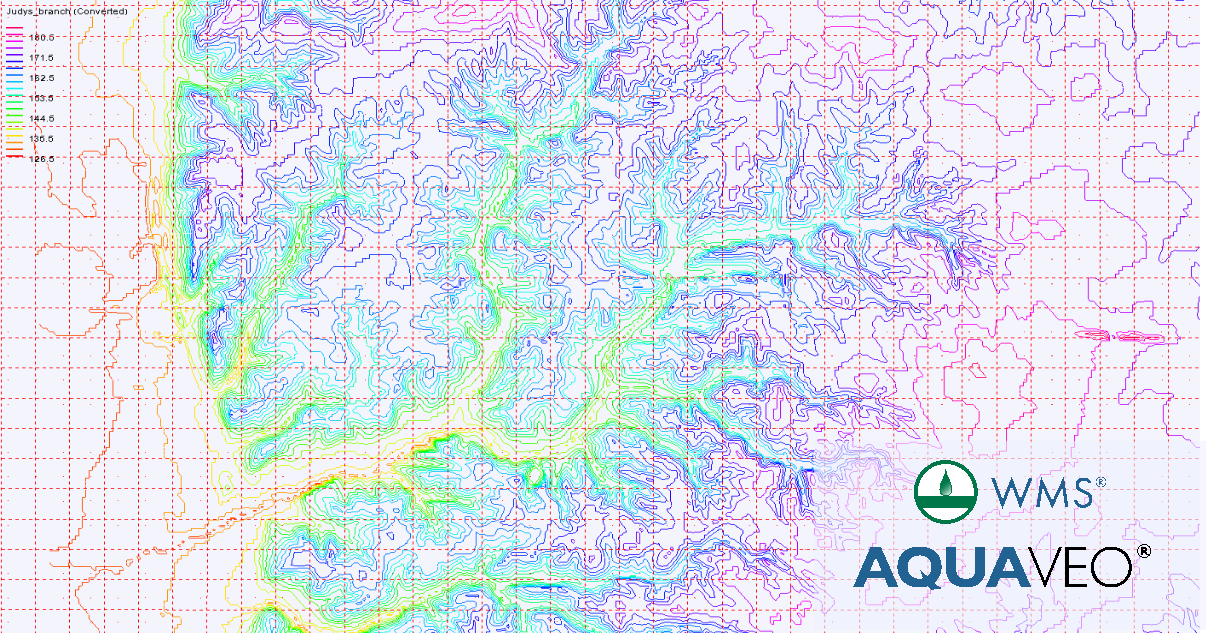
Understanding WMS: A Modeling Interface, Not a Single Model
WMS, developed by Aquaveo, is best understood as a GIS-based interface that integrates multiple hydrologic and hydraulic models, rather than a standalone solver. This flexibility allows users to select from engines such as GSSHA and HEC-HMS, each with different capabilities for handling rainfall and runoff processes.
Rain-on-Grid Capability in WMS
WMS does support spatially distributed (gridded) precipitation inputs, including raster and netCDF datasets. These inputs can be mapped onto computational grids, forming the basis for rain-on-grid style simulations. However, true rain-on-grid modeling—where rainfall is directly applied to a 2D hydraulic surface and routed dynamically—depends on the selected engine.
Best Option in WMS: GSSHA
Among the available models, GSSHA is the most suitable for rain-on-grid applications. It is a fully distributed, physics-based model that simulates:
-
Overland flow on a grid
-
Infiltration and soil moisture
-
Groundwater-surface water interaction
Because GSSHA routes water across a 2D grid, it aligns closely with the conceptual framework of rain-on-grid modeling. According to the U.S. Army Corps of Engineers, GSSHA was specifically designed for distributed watershed simulation, making it well-suited for spatial rainfall analysis (Downer & Ogden, 2004).
Limitations Compared to HEC-RAS Rain-on-Grid
Despite these capabilities, WMS does not natively replicate the workflow of HEC-RAS 2D rain-on-grid modeling. HEC-RAS applies rainfall directly to a hydraulic mesh and solves flow using diffusion wave or full momentum equations, producing detailed depth and velocity fields.
In contrast:
-
GSSHA models emphasizes hydrologic processes first, with simplified hydraulic routing
-
HEC-HMS models remains lumped or semi-distributed, not fully grid-based hydraulics
Conclusion: When to Use WMS for Rain-on-Grid
WMS is an exceptionally powerful platform for rain-on-grid modeling, provided you utilize the GSSHA engine. However, practitioners must apply the right tool to the right boundary conditions:
-
Use WMS (GSSHA) when the project scope demands a highly detailed, spatially distributed hydrologic model. If your primary challenge is accurately quantifying runoff generation over complex terrain, variable soil profiles, and dynamic weather systems, GSSHA excels.
-
Use HEC-RAS 2D (or SMS) when the project is primarily a hydraulic challenge, requiring detailed water surface elevations, shear stress calculations, and complex flow paths around urban infrastructure.
By understanding the distinction between hydrologic routing and hydrodynamic routing, you can confidently deploy WMS for robust rain-on-grid analysis without pushing the software beyond its intended physical constraints. Download WMS now to begin rain-on-grid modeling.
May 5, 2026
|
View: 2189
|
Categories: WMS
|
By: <a class="mp-info" href="https://aquaveo.com/blog/author/admin">Aquaveo Staff</a>
About the Author


Converting a NET File to an INP File
May 9, 2018
Performing a Silent Install of XMS (Passwords & Hardware Locks)
October 10, 2018
Computing Basin Curve Numbers in 9 Easy Steps
May 16, 2023
Performing a Silent Install for ALS
October 27, 2021
Tips for Finding Information on the XMS Wiki
September 25, 2019
Meet the New Display Panel
October 13, 2026
What’s New in the GMS 11.0 Beta
October 6, 2026
Simplify and Prepare Complex Geometry
September 29, 2026
Unlock SMS 14.0 Map Undo Features
September 22, 2026
Advanced Groundwater Modeling Techniques for 3D Data
September 15, 2026