We use cookies to make your experience better. To comply with the new e-Privacy directive, we need to ask for your consent to set the cookies. Learn more.


Model Groundwater Heat Flow with Confidence
Thermal interactions in aquifers are becoming a more important part of groundwater studies—from evaluating geothermal potential to understanding how temperature influences contaminant transport, ecosystem health, and long-term sustainability. As interest in subsurface thermal analysis grows, modelers need tools that make this work faster, easier, and more reliable.
With the latest release, GMS now supports the MODFLOW 6’s Groundwater Energy (GWE) Package, bringing advanced energy-transport modeling directly into the familiar GMS workflow.
GWE Modeling, Now Integrated into GMS
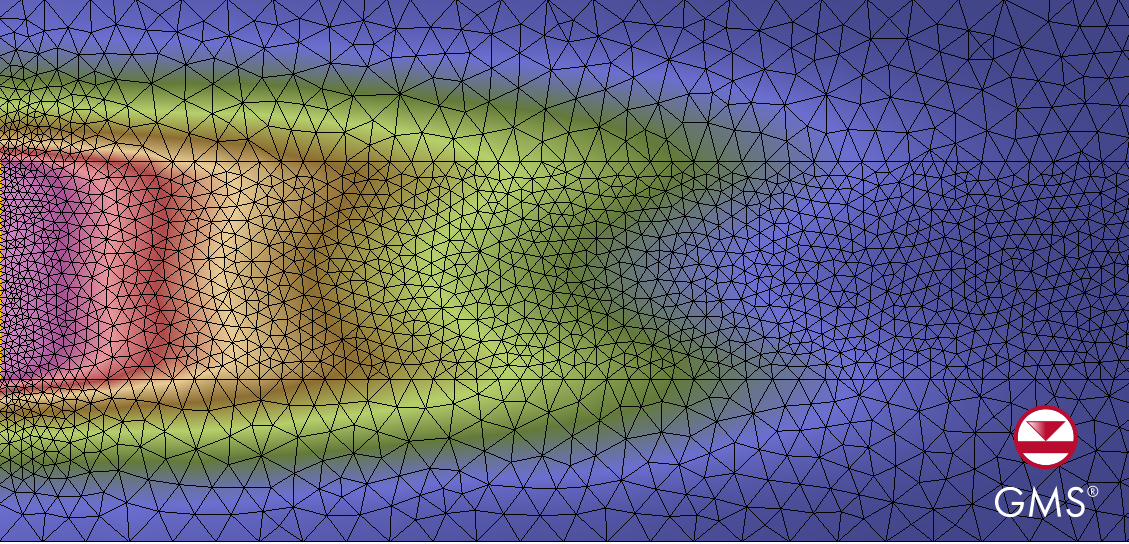
The new GWE package implementation gives you a streamlined way to build, visualize, and analyze groundwater heat-flow simulations without leaving GMS. Instead of handling complex thermal parameters and inputs by hand, the GWE tools in GMS guide modelers through defining thermal properties, setting boundary conditions, and reviewing results.
Key benefits of the new integration include:
-
Unified workflow: Build flow, transport, and energy models all within the same interface.
-
Simplified setup: Assign thermal parameters directly to materials, grids, and boundary conditions using standard GMS tools.
-
Consistent visualization: Display temperature heads, heat fluxes, and energy budgets with the same robust post-processing features used for other MODFLOW 6 outputs.
-
Fewer manual steps: Reduce the need to troubleshoot input files or manage external pre- and post-processing scripts.
GMS handles the structure of the GWE Package for you—allowing the focus to stay on interpreting the results.
Why Thermal Modeling Matters and How GMS Helps
Thermal effects can influence groundwater behavior in ways that directly affect environmental planning and engineering decisions. By adding GWE support, GMS makes it easier to answer questions such as:
-
How quickly does heat move through an aquifer under different flow conditions?
-
What are the long-term thermal impacts of infrastructure, injection wells, or groundwater extraction?
-
How do temperature changes affect contaminant mobility or water-quality thresholds?
These are analysis types that previously required specialized tools or custom scripting. With GWE integrated into GMS, they are now accessible through standard project workflows.
Designed for Real-World Applications
GMS implementation of the GWE Package supports a range of study types:
-
Geothermal and energy-storage evaluations
-
Thermal plume simulations around industrial or engineered systems
-
Ecosystem and cold-water refuge assessments
-
Long-term monitoring of temperature trends in aquifers
Because GMS manages inputs, material properties, and model structure visually, the barrier to running thermal simulations is significantly reduced. Even complex projects that require combined flow, transport, and energy modeling can now be built with a consistent, intuitive interface.
Get Started with GWE in GMS
The addition of GWE support represents another major step in GMS’s ongoing effort to provide a complete, modern interface to MODFLOW 6. Whether you are developing geothermal studies, evaluating temperature-driven water-quality changes, or simply need to account for thermal effects in your groundwater analysis, GMS now makes these simulations more accessible than ever.
Download the latest version of GMS and start exploring subsurface heat-flow modeling today.
December 9, 2025
|
View: 2136
|
Categories: GMS
|
By: <a class="mp-info" href="https://aquaveo.com/blog/author/admin">Aquaveo Staff</a>
About the Author


Converting a NET File to an INP File
May 9, 2018
Performing a Silent Install of XMS (Passwords & Hardware Locks)
October 10, 2018
Computing Basin Curve Numbers in 9 Easy Steps
May 16, 2023
Performing a Silent Install for ALS
October 27, 2021
Tips for Finding Information on the XMS Wiki
September 25, 2019
How to Calibrate a HEC-HMS Model for Peak Flow Accuracy
October 20, 2026
Meet the New Display Panel
October 13, 2026
What’s New in the GMS 11.0 Beta
October 6, 2026
Simplify and Prepare Complex Geometry
September 29, 2026
Unlock SMS 14.0 Map Undo Features
September 22, 2026